
Articles
Hours
Monday–Friday
10am–6pm
Think. Over and Over.
As a single footstep will not make a path on earth, so a single thought will not make a pathway in the mind. To make a deep physical path, we walk again and again. To make a deep mental path, we must think over and over the kind of thoughts we wish to dominate our lives.
Henry David Thoreau
As a single footstep will not make a path on earth, so a single thought will not make a pathway in the mind. To make a deep physical path, we walk again and again. To make a deep mental path, we must think over and over the kind of thoughts we wish to dominate our lives.
Henry David Thoreau
Let There Be Light
Christmas is more. Christmas, for me, is so much more than the latter of these competing narratives. And the scope of what Christmas means goes beyond the wonderful celebration we look ahead to with earnest anticipation. I hope over the next few days to share some conclusions I've come to as a result of my reflecting on these things.
Today, I want to share this thought: We were in darkness. He brought LIGHT.
I've been reflecting on this most wonderful time of the year very much recently.
The songs... The lights and decorations... The TV Specials... The weather... (I'm in Atlanta so that only means so much.)
I've also thought about the competing narratives we hear and see so often during this season of the year: The story of a young lady, soon to be married, who is visited by and angel and given life-changing news and the competing story of the latest pair of shoes or the hottest toy that will release in limited quantity and are must-haves this year. The story of a hurried journey taken by a pregnant woman and her betrothed, riding on a donkey, to a far place and the narrative of the latest model vehicle decorated with a giant bow sitting in the well-manicured driveway of an immaculate house on a quiet street in a beautiful neighborhood. The story of the birth of a child who would change the world and the story of lists and "toys" and ribbon and wrapping paper and trees and food and...
And, well, you get the point, I'm sure.
You and I both know very well that Christmas is more. Christmas, for me, is so much more than the latter of these competing narratives. And the scope of what Christmas means goes beyond the wonderful celebration we look ahead to with earnest anticipation. I hope over the next few days to share some conclusions I've come to as a result of my reflecting on these things.
Today, I want to share this thought: We were in darkness. He brought LIGHT.
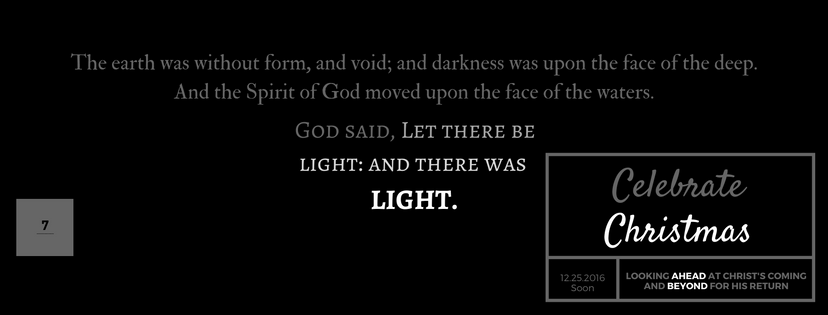
The Bible says that in the beginning, God created the heavens and the earth. The earth was formless empty, and dark. Not the most exciting place to be. There was no beauty there. No brilliant lights, nothing glorious; nothing even hinting at it. Just a shapeless, dark void.
But God was there.
This is significant. There before him lay something that was completely undesirable.
But, God knew what he was doing.
God entered into the massless, shapeless terrible darkness. And in the middle of this horrific, gross darkness He spoke. His very word caused the cosmos to tremble and shake and respond to his command: "Let there be light." And there was light.
This is Christmas.
He shows us in the first two verses of the entire book what everything hinges on.
There was darkness. He brought light.
The story is replete throughout scripture. God enters into dark places to connect to his people. Then brings light into the darkest and most hopeless situations to reveal Himself and His glory to his people.
This is Christmas. This is why I celebrate. Because of the assurance that Light is come and darkness is no more. and because of the hope that Light will come, and darkness will forever be no more.
“And the city has no need of sun or moon to shine on it, for the glory of God gives it light, and it’s lamp is the Lamb... Amen. Come Lord Jesus!”
What kind of extremists will we be?
So the question is not whether we will be extremists, but what kind of extremists we will be. Will we be extremists for hate or for love? Will we be extremists for the preservation of injustice or for the extension of justice? - Martin Luther King Jr.
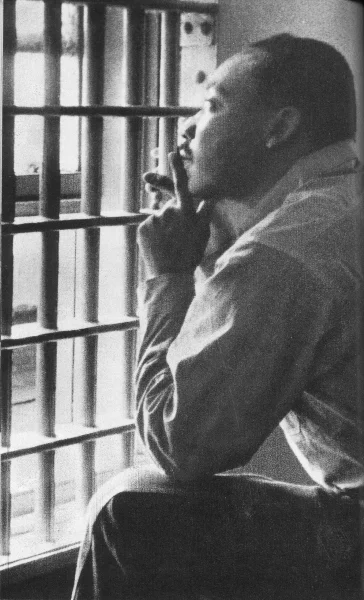
If you have never done so, take a half hour today and read "Letter from a Birmingham Jail."
Feel the sinceretiy, authenticity and conviction of Dr. Martin Luther King Jr.
And, my hope and prayer for you, as a result of reading and being inspired, is that you will take bold action in your sphere of influence and beyond to pursue racial reconciliation and all the beauty and glory which accompanies it.
What is Leadership and How Do We Do It?
What Is Leadership? That simple question has challenged some of the best minds in the world. Prolific, world-class thinkers, speakers and authors have undertaken the task of attempting to define leadership. Each thinks he knows it when he sees it and each tries to describe this illusive idea. No doubt they do “know it when they see it,” but definitions are different from descriptions and leadership is no easy thing to define. Peter Drucker said “the only definition of a leader is someone who has followers.” Warren Bennis said “leadership is the capacity to translate vision into reality.” John Maxwell said “leadership is influence – nothing more, nothing less.”
While I certainly agree that these men offer true and compelling elements of leadership, I think that they are only elements. You and I realize (if we are wise enough to step back and look well) that we only see a part of a whole. We describe what we see and do so well, but we only see so much. Each definition, or, rather, description, is correct but must include more than what is offered. Many bosses, supervisors, managers, commanders, C-level executives, politicians, etc. have “followers.” That does not make them leaders. I can write a book and “translate a vision into a reality,” but if no one reads it, am I leading? “No,” should be your response. And it would be a correct one (even if the book was good!) All I would have done is write a good book. Leadership requires the ability to influence others, and that definition is short and pithy and easy to convey, but it lacks depth. I could just as easily say manipulation is influence. Without something extra to qualify the statement “leadership is influence,” it hits the mark…then fizzles. Each definition must include the other and more.
Before I go further, let me say that I don’t presume to know more than these gentlemen and I certainly don’t mean to undermine their experiences. They saw leadership and described and explained what they saw. They see leadership and describe and explain what they see. I want to step back and look at more. I realize that if we focus in on one thing we do so to the detriment of other things as we attempt to put our finger on the pulse of this illusive idea. The closer we are to a thing the less we really see of it. It’s only when we step back that we can see more and more of the whole thing. Leadership is… What do you see?
How Do We Lead? Answering this question is just as difficult, or more so, than answering the question of what leadership is. If we believe that a leader is someone who has followers, and we stop there, we will find ourselves failing in our ability to lead and to do it well. We will focus on the amount of people who read our blogs or retweet or like our posts or comment or read our books or attend our seminars or “follow” us. And I mean that both inclusive of the social media world and the rest of the world. We can use the social stratosphere as one example of people having hundreds or even thousands of “followers” but not fulfilling the role of a “leader.” Again, the focus is too narrow. The same goes for translating vision or influencing others. If we stop there, we miss so much.
I have not seen the whole of what leadership is and I don’t want to offer a simple or incomplete answer to either of these questions. (I know I would find myself in the same position everyone else finds themselves in when we try to define such a dynamic concept.) I do, however, want to offer a few observations on how effective leaders lead.
They Share Vision. Leaders have vision. Good or bad, effective or ineffective, one thing we can agree on is that leaders have vision. Good, effective, “follow-worthy” leaders share vision. They present their vision in such a way that the people around them are compelled by what they hear and see and are willing to commit themselves to the shared vision of the person they now view as a leader. Mutual ownership is a key to a shared vision.
They Share Responsibility. Effective leaders recognize the strengths in others and the weaknesses in themselves and are willing to share the responsibility of realizing the vision. They don’t simply delegate. They offer the people who follow them the opportunity to lead alongside them. Through shared responsibility, they maximize the efforts of those they lead.
They Understand Authority. (This is a hard one.) They understand that giving someone responsibility is only a first step. Effective leaders realize that if their influence or organization or cause will succeed and grow, both responsibility and authority must be conveyed. Responsibility without authority is handicapped. They know they can’t go it alone, so they confer authority to those who follow them so that their shared vision and mission can be brought into existence.
They Trust. Effective leaders trust the people they lead. They trust that the responsibility they share and the authority they convey won’t be abused or mishandled by the people they lead. They are willing to give without holding back because they are confident that the vision they cast was shared by the people who caught it. (And they are confident in the people who caught it.)
They Have Trust. Effective leaders not only trust those they lead, but they have the trust of those they lead. One of the most challenging tasks in the world it to attempt to lead people who don’t trust you. Trust is crucial. Les Csorba said “leadership is character in motion.” While I feel his definition should be grouped with the others to help add depth and breadth to theirs, I feel his touches something that many leadership definitions don’t touch. It puts morality into leadership. (Or, rather, puts morality back into leadership.) Somewhere along the way we lost this crucial element and we have stumbled like men walking in the dark ever since. Effective leaders have the trust of those they lead.
Charisma and drive and stature and skill and ability are good. But those qualities don’t make you a better leader. Those qualities make great followers more often that they make great leaders. Those qualities are important, sure, but those qualities are not everything. Leadership is not personality. Leadership is not what we can do.
Leadership is…. What do you see?
The Substance Behind the Shadows
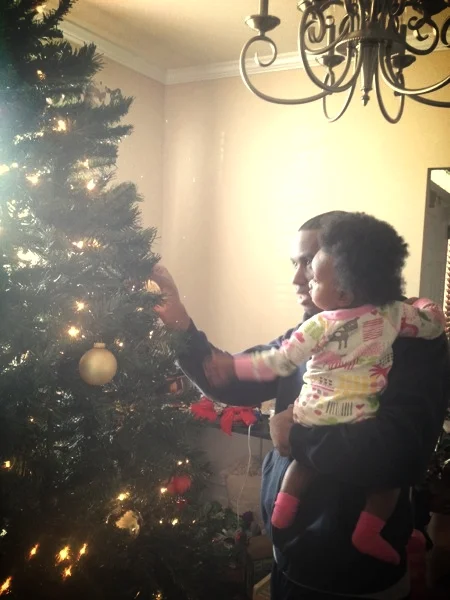
Over the last two weeks my family and I have been preparing for and celebrating the Christmas season like most families likely are. We pulled boxes down from the attic and began "decking the halls." We put a wreath on the door and erected and decorated the Christmas tree. The fireplace saw its first fire and we prepared the stockings which will hang on it.
This Christmas, however, is different. It will be our daughters first Christmas! She's 8 months old so she won't remember very much this year, but my wife and I will make memory after memory after memory. We've already begun taking dozens of pictures and they will soon be eclipsed by the hundreds which will follow. The joys and delights of the season have always been a joy to me and the memories I have of Christmas past are precious to me. I now have the privilege of creating and cultivating traditions and memories for my daughter and I've been giving it a lot of thought. What do I want her to think about Christmas. About Christ? About gifts and trees and traditions and family and celebration and food and a dozen other "Christmas things?"
The fruit of my contemplation will undoubtedly produce good things for our family's future. One such thing is an intentional concentration on Advent. I don't recall ever focusing on "Advent" as a child, but (my wife and) I decided to make it a part of our family tradition. I found a little book called Good News of Great Joy: Daily Readings for Advent by John Piper and began on December 1st reading and meditating with my family and filling our home with Hope. Today's reading was especially stirring. Here is a snippet:
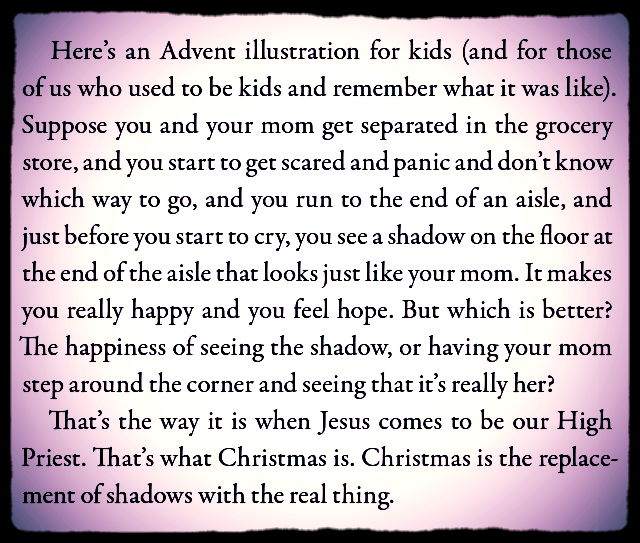
"Here’s an Advent illustration for kids (and for those of us who used to be kids and remember what it was like). Suppose you and your mom get separated in the grocery store, and you start to get scared and panic and don’t know which way to go, and you run to the end of an aisle, and just before you start to cry, you see a shadow on the floor at the end of the aisle that looks just like your mom. It makes you really happy and you feel hope. But which is better? T he happiness of seeing the shadow, or having your mom step around the corner and seeing that it’s really her? That’s the way it is when Jesus comes to be our High Priest. That’s what Christmas is. Christmas is the replacement of shadows with the real thing."
As I consider the Christmas season and as I consider my role as a husband and a dad I am overwhelmed by the position I find myself in. I am, in a sense, only a shadow. My wife and daughter look to me to be strong and courageous, gentle and comforting, wise and true. I am provider and protector and priest of my home, but my ultimate aim is that they would look past me. That they would see the substance behind the shadow. That in my loving my wife and raising my daughter, they would see the love of Christ and the care of a greater, stronger more wise and compassionate father. And not only see it, but become overwhelmed with the joy of what seeing means: that they would run to and embrace the real and great God who makes the wonder of Christmas what it is.
So are you looking at the shadows or the substance behind them? I challenge you to look past the "ordinary things" and the shadows and see the "real thing."
Remember Me...
This lesson was a difficult one to learn. Why? Because on more than one occasion, I have not remembered.
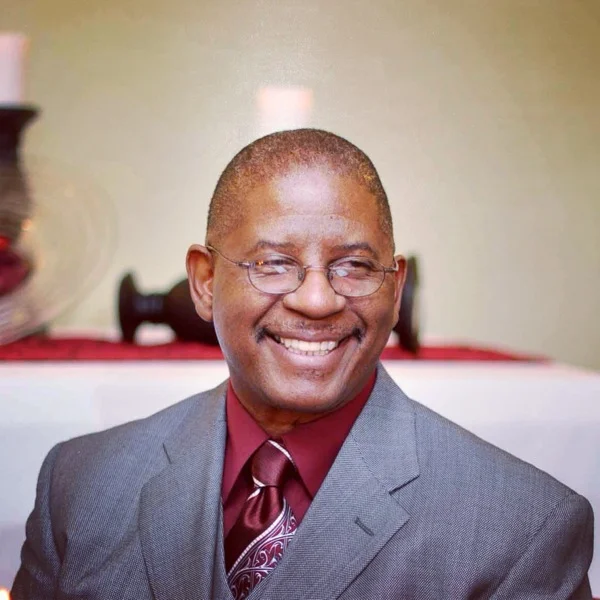
Photo courtesy of QuiKe Photography & Video
I learned this from my father, but it wasn't a lesson he taught in a phrase. Nor was it an observation made based on a pattern of behavior I saw in him. He never asked to be remembered. And while I know that he would appreciate being remembered (everyone does you know) he is not the kind of man who would ask to be. I learned this lesson by looking at him and realizing how valuable his life and influence are to me.
I remember, on one occasion, having an opportunity to introduce a panel of guests to a platform. There were several gentlemen there, distinguished in their field, who were to address the conference. My father was on the platform as well, but he was not speaking at this event or sitting on any panels. His role was similar to mine. It was minor. When I spoke, one by one, I mentioned every man on the stage. Every one except my father. He took his turn and shared his part and I wouldn't have given it another thought except that someone brought it to my attention that I spoke of every man with good and kind words, but I did not mention my dad. I didn't remember...
I remember another occasion, when I shared with a gentlemen who had become my mentor some details of a decision I was wrestling with. In order to give him a clearer picture of my situation, I shared a little history to provide context for the decision. After I received the counsel of my mentor, and after I began to implement it, I realized I hadn't gotten any input from my father. I didn't remember...
Those two experiences (and many, many others) taught me to remember my father. I learned that his experience, wisdom and input are invaluable. Even if I don't agree with him or if I think I know what he'll say, it is worth hearing him say it. Here are a few reasons why:
My dad is one of the most humble men I know. He is down to earth and a little plain. "Arrogant" or "unsociable" or "unapproachable" are no where near the radar when it comes to describing him. If you knew him, you wouldn't say he had an iota of flamboyance.
My dad is smart. He has no letters behind his name, but he is observant. He listens, That's more than can be said of many men I know. That one trait alone make him more intelligent than most.
My dad is caring and kind. There is no clearer picture of this than in the way he raised my siblings and I. And in the way he continues to care for my brother, David, who has cerebral palsy. He and David share a unique bond forged in laughter and service. Everything important I learned about service I learned from my dad. I've been to conferences and read books on the topics of servant leadership and service learning and service "everything else," but they didn't show me a servants heart. My dad did that.
My dad is generous. He has sacrificed time and time and time and again to give. Whether it be to a stranger or to a friend or most of all to his family, my dad has shown what it means to give till it hurts.
My dad is a thousand other great things. As my siblings or my mom and they will tell you. Ask his siblings or in-laws and they will tell you. Ask the people who now him well, the people he works with or the people who have only met him once or twice and they will have good things to day about David L Mouton.
And if you ask me, I will tell you as well. I will remember.
I am grateful for every lesson I learned from my father.